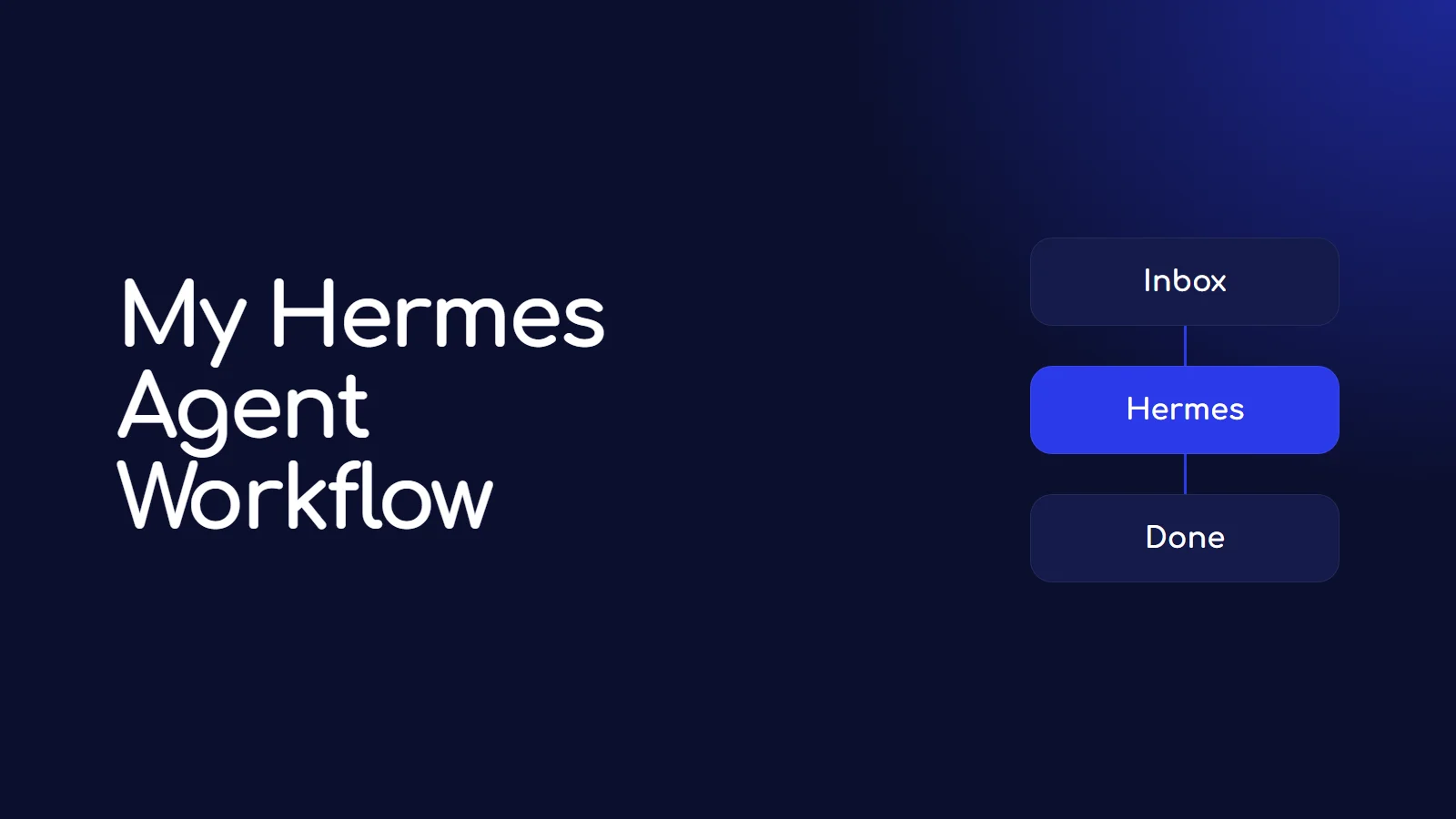
I do not write every blog post manually anymore. I do not spend hours researching topics, drafting emails, or scheduling follow-ups. My agent does it. Here is the full breakdown of how I use Hermes Agent to automate emails, web research, and blog posts end to end — so I can focus on building, not typing.
What exactly gets automated in my workflow
Before I show you the setup, here is what the system handles on a typical day:
Email follow-ups: Drafted, personalized, and queued based on conversation context and timing rules
Web research: Tavily searches trending AI news, competitors, and topics my audience cares about
Blog writing: SEO-optimized 1,000 to 1,500-word articles written in my voice, posted automatically to my site
Social content: Instagram carousels and scripts generated from the same research data
Daily reminders: Persistent task list checked twice a day, nothing falls through
All of this runs on a single agent instance that remembers my preferences, my brand voice, and my business goals across every session.
How the email automation works
Email is where most people lose hours. I used to write the same types of messages over and over — intros, follow-ups, meeting requests, partnership pitches. Now Hermes handles the first draft using context from previous conversations.
Here is how it works:
I drop a contact or thread into the agent with a simple instruction like "Follow up with Faisal about the n8n integration quote"
The agent pulls my saved context (previous messages, tone preferences, my role at BrandSparc)
It drafts a response that sounds like me — short, direct, no fluff
I review and send, or tell it to adjust the tone (more formal, shorter, add pricing)
The key is that it remembers. It does not start from zero every time. It knows I prefer short paragraphs, that I sign off with my first name, and that I rarely use exclamation marks. That memory makes the drafts usable without heavy editing.

My typical agent session: research on the left, drafted email and blog outline on the right.
How the research layer works
Every article and carousel starts with real research, not guesswork. I have the agent connected to Tavily, which pulls live search data and AI summaries from across the web.
For a blog post about a new AI tool launch, the agent:
Searches for the official announcement, early reviews, and competitor reactions
Reads the top 5 ranking articles to understand what angle they took
Mines "People Also Ask" and Reddit discussions for real user questions
Checks what ChatGPT, Perplexity, or Gemini currently say about the topic
Returns a structured brief: keyword, search intent, H2 suggestions, and sources
This takes about 30 seconds. Before, I would spend 45 minutes doing this manually across tabs. The agent does not skip steps. It reads, analyzes, and hands me a plan.
How blog posts get written and published
Once research is done, the agent moves to writing. Here is the exact process:
Gate 1: The agent shows me 3 to 4 title options and asks which featured work (BrandSparc, hive.clips, etc.) fits the post
Draft: It writes the full article in HTML, following a strict SEO checklist — keyword in title, first paragraph, one H2, slug, and meta description
Gate 2: I review the draft, suggest edits, and approve
Publish: The agent POSTs the article directly to my Next.js blog API with published set to true
The articles are 1,000 to 1,500 words, written in a casual technical voice (short sentences, no corporate filler), and include an FAQ block at the end. They are optimized for both Google and AI search engines.
On days when I do not give the agent a specific topic, it picks trending AI news and writes three posts automatically at 10 AM, 2 PM, and 6 PM IST. When I have a specific idea, I override the schedule and it writes that instead.
The tools that power this setup
Component What it does Hermes Agent The core orchestrator. Runs research, writing, and publishing loops with persistent memory. Tavily Real-time web search with AI summaries. Feeds the research phase with current data. Next.js Blog API Custom API endpoint at danishsofi.in. Receives the final HTML article and publishes it live. Cron Jobs Scheduled agent runs at 10 AM, 2 PM, and 6 PM IST for automatic daily publishing.
What I learned from six months of running this
Automating content is not about removing yourself from the process. It is about removing the repetitive 80 percent so you can focus on the 20 percent that actually matters: strategy, relationships, and building.
Here are the three biggest lessons:
1. Memory is everything. An agent that forgets your voice and preferences every session is useless. Hermes Agent persists my brand rules, my tone, and my business context across conversations. That is what makes the drafts usable without rewriting.
2. Two gates prevent garbage. Gate 1 (approve the title and angle) and Gate 2 (review the full draft) take two minutes combined. They save me from publishing off-brand or thin content. Never skip them.
3. Start with one workflow, not ten. I began with just blog research. Once that was solid, I added email drafts. Then social content. Then publishing automation. If you try to automate everything at once, you will break everything at once.
Who is this actually for
This setup works best for founders, creators, and agency owners who:
Publish consistently but do not want to hire a full-time writer
Need to stay on top of AI and automation trends without manually scanning news
Want their content to sound like them, not generic AI filler
Have the technical ability (or team) to wire up APIs and cron jobs
If you are looking for a plug-and-play tool with no setup, this is not that. If you are willing to spend a day building the pipeline, it pays off every single day after.
Frequently asked questions
Can Hermes Agent replace a human writer completely?
No, and that is not the goal. The agent handles research, first drafts, and publishing mechanics. The final review and strategic direction still come from me. It is a multiplier, not a replacement.
How much does this setup cost to run?
The agent itself is part of my existing infrastructure. Tavily search costs a few cents per query. Blog hosting is already paid for. The main cost is time: about one day to wire everything up properly.
Does Google penalize AI-written content?
Google penalizes low-quality content, not AI-written content. If your article answers real questions, cites sources, and provides unique perspective, it ranks. My articles are researched, reviewed, and optimized for both SEO and GEO (Generative Engine Optimization).
Can I use this for client work at my agency?
Yes, but each client needs their own voice profile, brand rules, and approval gates. I use separate cron jobs and agent profiles for different content streams so nothing bleeds between brands.
What happens if the agent writes something wrong?
Gate 2 catches most issues. For sensitive claims, I require the agent to cite sources inline. If a source is missing or weak, I send it back for fact-checking before publishing.
Want this built for you
If you want a custom AI content and automation pipeline for your business, my team at BrandSparc builds these end to end.